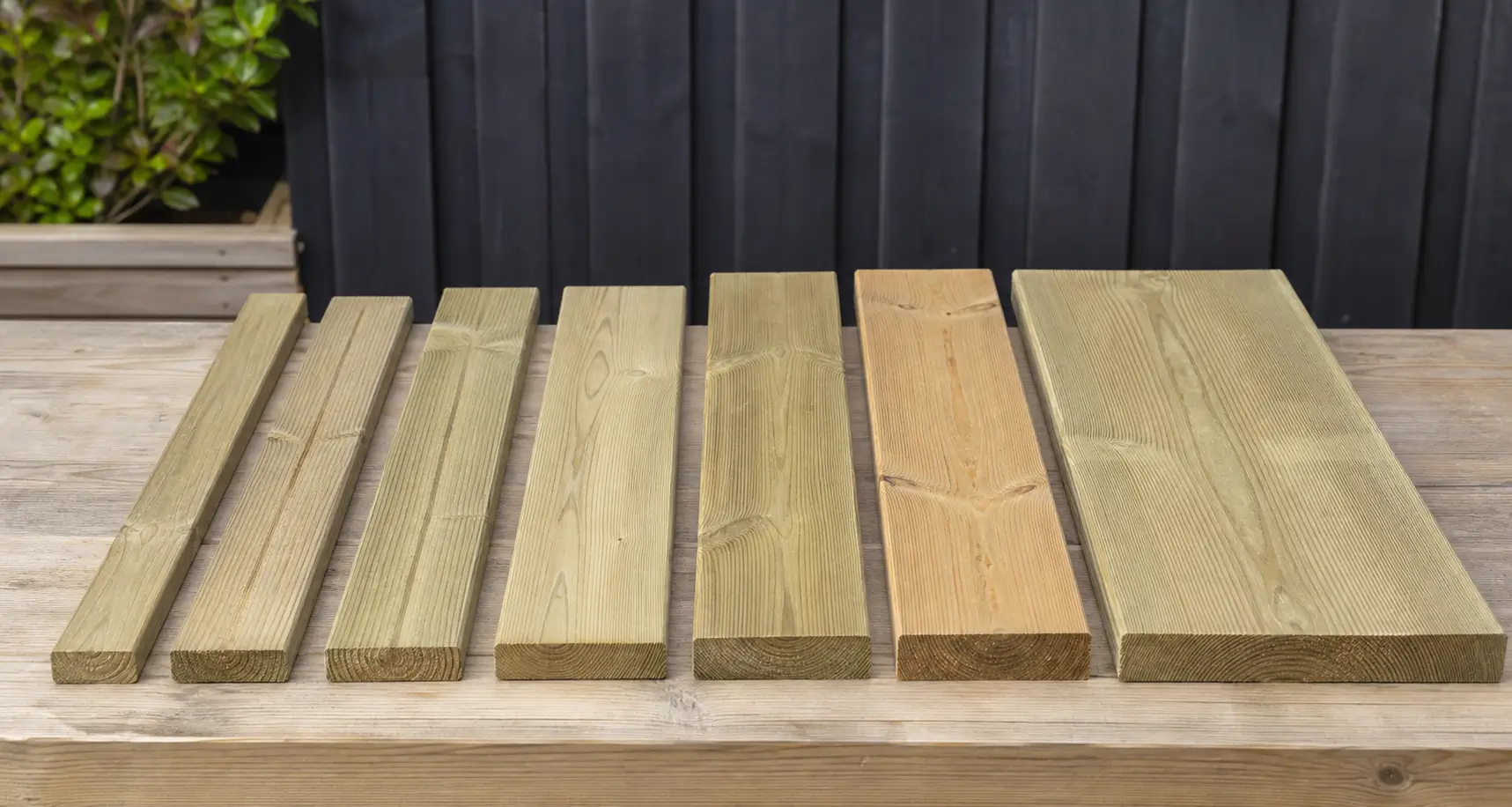
Deck board width may look like a small detail, but it affects most of the material list. Narrower boards create more board rows, more fastening points, and usually more installation work. Wider boards can reduce linear footage and create a calmer surface, but they also need stable material and careful installation.
Choose the board width before you estimate materials, compare prices, or lock in the board direction.
Why width matters
Decks are planned in square feet or square meters, but decking is often estimated in linear length. Board width connects those two numbers.
For the same deck area, narrow boards need more linear footage than wide boards. They also create more rows, more screws or clips, and more gaps to keep consistent.
A 30 square meter deck built with 95 mm boards will not use the same amount of decking as the same deck built with 120 or 145 mm boards.
Narrow deck boards
Narrow boards can give a classic, detailed look. They can also be useful on smaller decks, stairs, and areas with many cuts.
Advantages:
- easier to handle alone
- useful around edges and small details
- more traditional appearance
- less movement per individual board
Drawbacks:
- more linear footage per square meter
- more screws or clips
- more gaps to keep even
- usually more installation time
Narrow boards often work well when the deck is small or has many details.
Wide deck boards
Wide boards cover more area per linear length. They can mean fewer rows and a quieter visual surface, especially on large rectangular decks.
Advantages:
- fewer board rows
- often faster installation on simple areas
- calmer appearance
- fewer visible screw lines with face screws
Drawbacks:
- may move more if the material is not stable
- needs careful spacing and fastening
- less forgiving if boards are not straight
- individual defects can be more visible
Wide boards work best with a flat frame, stable material, and the manufacturer’s installation guide.
How width changes linear footage
As a simple rule, wider boards need less linear footage. Narrower boards need more.
For example:
- 95 mm boards require more linear length per square meter
- 120 mm boards are often a practical middle option
- 145 mm boards require less linear length per square meter
The gap between boards also affects the result. That is why a useful calculator should use both board width and board spacing, not just deck area.
Use the deck calculator to test several widths before deciding. Keep the deck area the same and change only the board width. You will quickly see how the linear footage and screw estimate change.
Width also affects screws
Screw count depends on how many board rows cross the joists. More narrow boards create more rows and more fastening points.
For standard face-screwed decking, a common baseline is two screws at each joist for each full-width board. The deck screw spacing guide explains that pattern in more detail.
If you use hidden fasteners, width affects the number of clips in the same way. More board rows mean more clip lines. See hidden deck fasteners if you are comparing clips with visible screws.
Small decks and large decks
On small decks, narrow or medium-width boards can look balanced. They create more lines, but they can make edges, steps, and small cuts easier to resolve.
On large decks, wider boards can create a calmer surface. Fewer rows may suit modern facades and big open deck areas.
There is no single correct width. Consider:
- deck size
- board direction
- number of edges and details
- material type and quality
- visible screws or hidden fasteners
Check available lengths too
Board width should be considered together with board length. A wide board that fits the deck poorly can still create more waste. A narrower board in a better length may be easier to use efficiently.
Check what dimensions your supplier actually has available before finalizing the material list. If you are comparing options, also read about deck board waste allowance.
Short version
Choose board width before ordering materials. Narrow boards mean more rows, more fasteners, and often more work, but they can suit small or detailed decks. Wide boards can reduce linear footage and create a calmer look, but they need stable material and careful installation.
The simplest test is to run the same deck area through the calculator with two or three board widths. That shows how the choice affects decking, screws, and the full material plan.